
Software development is behind every digital product your business depends on, the CRM your sales team uses, the app your customers have on their phones, the system that runs your invoicing. Yet for most business leaders, how it actually works remains unclear.
This guide covers everything you need to know as a decision-maker. Whether you are evaluating a software project for the first time, trying to understand what your existing development team is doing, or deciding whether to build in-house or outsource software development, start here.
By the end, you will understand what software development is, how the process works step by step, which methodology delivers the best results for modern business projects, and what it takes to choose and work with a development team that delivers.
What is Software Development?
Software development is the process of designing, building, testing, deploying, and maintaining software applications. It covers everything from mobile apps and web platforms to internal business systems, APIs, and automated workflows.
The process typically moves through these stages:
- Requirements gathering understanding what the software needs to do and for whom
- System design planning architecture, data models, and the technology stack
- Implementation writing and integrating the actual code
- Testing and QA verifying that everything works as intended under real conditions
- Deployment releasing the software to users or production environments
- Maintenance keeping the system updated, secure, and performant over time
Software development is rarely a straight line. Modern projects cycle through these stages iteratively, adjusting as requirements evolve and user feedback comes in.
Types of Software Development
Before starting any project, it helps to understand which type of software development actually applies to your situation.
Custom Software Development
Custom software is built specifically for your business. It solves your exact problems, integrates with your existing systems, and is owned entirely by you. It requires more time and investment upfront but delivers better long-term value than off-the-shelf alternatives that require workarounds and compromises.
Web Application Development
Web apps run in a browser and are accessible across devices without installation. They range from internal business tools and dashboards to complex SaaS platforms. Most modern business software is delivered as a web application.
Mobile Application Development
Mobile apps are built for iOS and Android, either natively or using cross-platform frameworks like Flutter or React Native. They are essential for businesses that need to deliver value directly on users’ devices.
Enterprise Software Development
Enterprise systems, ERPs, CRMs, HR platforms, supply chain tools, are large-scale software solutions that run core business operations. They require experienced developers with domain knowledge, strong architecture skills, and a structured delivery process.

AI and Automation
AI-powered software and workflow automation tools are increasingly part of the modern development landscape. These include custom machine learning models, intelligent document processing, and integration automation using tools like n8n.
At Manao, AI is not a feature we added to our service list. It is embedded in how we build every project. Our developers use agentic coding, AI pair programming, and automated code review at every stage of development. Every piece of AI-generated code is reviewed by senior developers with deep experience who can judge whether it is correct, well-structured, and safe for production use.
This matters because AI adoption in software development carries real risk when done carelessly. Teams that use AI to generate and ship code without proper review, sometimes called “vibe coding,” trade short-term speed for long-term reliability problems. Manao does not operate this way. We use AI to move faster, but we never trust AI output blindly.
We built OMEGA, our own internal AI delivery platform, to formalise this approach across every project. OMEGA gives our clients concrete benefits:
- AI-powered project templates that give every project a solid architecture from day one, rather than starting from scratch each time
- AI-assisted test case generation that improves test coverage without inflating QA cost, building on our ISTQB Gold Partner credentials
- AI-assisted scoping and estimation that produces more accurate project estimates and reduces the scope surprises that derail outsourced engagements
AI also supports our architecture reviews, security scanning, dependency analysis, and operations layer, with AI-powered monitoring, intelligent alerting, and automated incident response built into every production environment we manage. The result is a development team that is faster than those not using AI, and more reliable than those using AI without proper oversight.
Software Development Methodologies
How a team organises its work is as important as the technical skills it brings. The methodology determines how decisions are made, how work is prioritised, and how problems are surfaced and resolved.
Agile
Agile is an iterative approach built on the values and principles first set out in the Agile Manifesto (2001). It delivers software in short cycles, after each cycle, working software is demonstrated, feedback is gathered, and priorities are adjusted. Agile significantly reduces delivery risk because problems surface early, the business stays closely involved throughout, and the team can adapt as understanding of the problem improves.
The four core values of the Agile Manifesto prioritise individuals and interactions over processes and tools, working software over comprehensive documentation, customer collaboration over contract negotiation, and responding to change over following a rigid plan.
Most modern software development teams use Agile frameworks because they consistently produce better outcomes for complex, evolving projects than sequential approaches do.
Scrum, The Most Widely Used Agile Framework
Scrum structures Agile development into defined sprints, typically two to four weeks each. At the end of every sprint, the team delivers a working, tested increment of software. According to The Official Scrum Guide, the definitive reference authored by Scrum co-creators Ken Schwaber and Jeff Sutherland, sprints are the heartbeat of Scrum, where ideas are turned into value.
The sprint cadence creates a natural rhythm for feedback, course correction, and continuous improvement.
Scrum offers three core advantages for business projects:
- Reduced risk incremental releases allow problems to be identified and corrected early, before they compound into expensive late-stage failures
- Continuous feedback stakeholders review real, working software after each sprint, not just status reports
- Adaptability changing priorities can be accommodated between sprints without derailing the entire project
Scrum is Manao Software’s default delivery framework. Over 170 companies have trusted us to run their software projects this way.
DevOps
DevOps extends Agile principles to the operations side of delivery. It emphasises automation, continuous testing, and continuous deployment, so software can be released frequently and reliably. Teams that practise DevOps spend less time on manual processes and more time delivering features that create value.

How AI is Changing Software Development
AI tools are reshaping how software is built, how fast teams can move, and what a professional custom software development service looks like. For business leaders evaluating a software development partner or deciding between building in-house and outsourcing, understanding how AI fits into the delivery process is now as important as understanding methodology.
AI-Assisted Coding and Productivity Acceleration
AI coding assistants allow developers to generate code, complete repetitive patterns, and explore implementation options far faster than manual coding alone. When used well, this translates directly into faster delivery, more output per sprint, and better value per development dollar. Application development timelines that previously required large teams or long schedules can be compressed without sacrificing quality, provided the AI output is properly supervised.
Automated Testing and AI-Assisted QA
AI-assisted test case generation is one of the most practical near-term gains for software development teams. Instead of QA engineers manually writing test coverage from scratch, AI can generate comprehensive test suites based on requirements and existing code, then flag edge cases and regressions automatically. This means broader test coverage without proportionally higher QA cost, which is especially valuable for outsourced development teams where scope and budget are fixed.
AI Code Review and Architecture Analysis
AI code review tools can scan for common security vulnerabilities, flag anti-patterns, and identify dependency risks faster than manual review alone. Used as a complement to peer review by senior developers, they raise the floor of code quality across the entire codebase. AI-assisted architecture analysis can also surface structural risks earlier, before they become expensive to unwind.
The Risks of Over-Reliance on AI: Why Senior Developer Oversight Matters
The productivity gains from AI come with a real risk: teams that trust AI output without proper review create a different class of software quality problems. AI-generated code can be plausible-looking but structurally flawed, insecure, or unsuitable for the specific architecture of the project. Junior developers who lack the experience to judge AI output critically are especially exposed.
This is why senior developer oversight is not optional in a responsible AI-augmented software development process. Senior engineers bring the contextual judgment to validate AI output against real-world requirements, security standards, and long-term maintainability. The goal is to be faster than teams that do not use AI, and more reliable than teams that use AI without proper review. That combination is the standard any serious offshore software development service should be held to.
The Modern Software Development Process Step by Step
The following describes how a well-run Scrum project moves from business need to working software and how it keeps improving after delivery.
1. Discovery and Requirements
Before a line of code is written, the team must understand the problem they are solving. This means stakeholder interviews, user research, business analysis, and the creation of user stories that express what the software needs to do in terms of real user outcomes.
Skipping this phase, or doing it poorly, is the single most common cause of software project failure. In outsourced projects, unclear requirements often create a chain reaction: sprint delays, scope of disagreement, QA bottlenecks, and rework costs that compound over time. Requirements that are vague, incomplete, or not agreed upon lead to software that does not solve the actual business problem, regardless of how well it was built.
The output of this stage is a prioritised product backlog: a dynamic list of all desired features, enhancements, and technical work, managed by the product owner and continuously refined as the project progresses.
Key practices:
- Writing features as user stories to keep the focus on delivering value (“As a user, I want to…”)
- Estimating each backlog item for complexity and effort
- Prioritising ruthlessly based on business impact, not feature completeness
2. System Architecture and Design
With requirements understood, the technical team designs the system. This covers which technologies to use, how data will flow, how services will communicate, how the application will scale under load, and how security will be handled throughout.
Good architecture decisions made early prevent the kind of structural rewrites that stall projects or make them prohibitively expensive to maintain. This stage also includes UX and UI design, the information architecture, interaction patterns, and visual design that determine whether users can actually achieve their goals in the product.
3. Sprint Planning
Each sprint begins with a planning session. The team, the product owner, scrum master, and development team, defines a sprint goal: a clear, specific objective that guides all work for the cycle. They select the highest-priority backlog items that can be realistically completed within the sprint, break each item into tasks, and estimate the effort involved.
This planning session is what makes Scrum predictable. Every sprint starts with a shared understanding of what will be built and why.
4. Development, Design Iteration, and Integration
During the sprint, developers implement the features planned. This involves:
- Coding front-end and back-end components
- Managing code through version control systems
- Integrating software components and third-party application programming interfaces (APIs)
- Iterating on UX and UI design based on build feedback
- Reviewing and refining code continuously through peer review
- Identifying blockers and dependencies early so they do not accumulate
At Manao Software, development and QA run in parallel throughout each sprint. Testing is not a final gate it is an ongoing activity that ensures quality is built in rather than bolted on.
5. Testing and Quality Assurance
Quality assurance is embedded throughout the sprint, not reserved for the end of the project. QA engineers write automated test cases, perform manual exploratory testing, and verify that each feature meets its requirements under real-world conditions.
Integrating QA throughout development matters because the cost of fixing a defect escalates dramatically the later it is found. A bug caught during development costs a fraction of what the same bug costs if it reaches production. Rigorous testing protects the business, protects the user experience, and maintains the trust of the end customer.
6. Sprint Review and Stakeholder Feedback
At the end of each sprint, the team demonstrates completed, working software to stakeholders. This is not a status update, it is a live demonstration of real functionality. Stakeholders provide feedback, the product owner updates the backlog to reflect that feedback, and the team enters the next sprint with a clearer picture of what matters most.
This feedback loop is one of Scrum’s most valuable properties. It keeps the business involved throughout delivery and prevents the experience of receiving software at the end of a long project that does not reflect what was actually needed.
7. Sprint Retrospective and Continuous Improvement
After the sprint review, the team holds a retrospective, a structured discussion about what went well, what did not, and what the team will do differently in the next sprint. Retrospectives improve the team’s process incrementally over time, which compounds into significantly better delivery outcomes across a long engagement.
8. Deployment
Once features pass all quality checks, they are released, first to a staging environment for final review, then to production. Modern deployment pipelines use CI/CD (Continuous Integration/Continuous Deployment) to automate this process, reducing human error and enabling frequent, reliable releases.
Under Scrum, deployment may happen at the end of every sprint or on a defined release cadence. The flexibility allows teams to push updates quickly when the business needs it, and to stage releases carefully when the context requires it.
9. Ongoing Maintenance and Enhancements
Software development does not stop at launch. Every live system requires ongoing maintenance: security patches, performance improvements, compatibility updates as operating systems and platforms evolve, and new features as business needs change.
Scrum’s iterative structure makes this natural. The same sprint cadence used during initial development continues after release, sustaining the product and expanding it based on real user feedback and business priorities.
Learn about How Custom Software Solutions Improve Efficiency and Productivity

In-House vs. Outsourced Software Development
For most businesses, the decision of how to staff a software project is as consequential as the choice of methodology.
Building an In-House Team
An internal development team is deeply familiar with the business, available full-time, and embedded in the company’s culture. It is the right model for businesses where software is the core product and sustained, long-term development is required.
The reality of in-house hiring: senior developers are in high demand and expensive in most markets. Building a team with the full range of skills a modern project needs, front-end, back-end, mobile, QA, DevOps, security, requires significant time and ongoing investment. For businesses where software is not the primary product, this overhead is rarely justified.
Working with an Outsourced Development Team
Outsourcing provides access to a complete, experienced development team, without the cost and complexity of employment. A well-structured outsourcing engagement delivers:
- A team with the full range of technical disciplines needed for the project
- Established delivery processes and tooling from day one
- The ability to scale capacity up or down as project phases change
- Cost efficiency without sacrificing engineering quality
The key is choosing a partner with the right experience, a demonstrably reliable process, and genuinely transparent communication.
Not sure whether to build internally or outsource?
How to Choose the Right Software Development Company
Not all development partners operate the same way. Here is how to evaluate them before committing to an engagement.
Portfolio and relevant experience. Ask to see delivered projects similar in scope and complexity to your own. Strong portfolios demonstrate capability. Ask to speak directly with previous clients.
Defined delivery process. A professional development company has a clear process for managing requirements, running sprints, reviewing code, handling QA, and deploying releases. Ask specifically how they manage scope changes, communicate risks, and resolve production incidents. Vague or inconsistent answers are a reliable warning sign.
Communication quality and structure. The most common source of outsourcing failure is communication breakdown. Before the project starts, agree on meeting cadences, reporting formats, escalation paths, and decision-making authority. A good partner proactively structures this with you.
Embedded QA. Testing should run throughout development, not be applied as a final check. Ask whether QA engineers are part of the sprint team. Ask how defects are tracked and resolved. Ask what “definition of done” means for a completed feature.
Transparency about risk. A reliable partner surfaces problems early and escalates them clearly. Be cautious of teams that consistently report everything is on track until suddenly it is not.
The True Cost of Software Development
Many businesses underestimate what software development actually costs — and the wrong framing leads to poor decisions.
What Drives Cost
- Team seniority senior engineers cost more per hour but move faster, write better code, and produce far fewer defects
- Project complexity integrations, security requirements, custom logic, and scale all add real scope
- Timeline pressure compressing a delivery timeline typically increases total cost by requiring a larger team or accepting technical debt that must be repaid later
- Geography rates vary significantly by region, but rate alone is not a useful metric without accounting for quality and communication
Why the Cheapest Option Is Often the Most Expensive
The cheapest development engagement is almost never the most cost-effective. Low rates frequently reflect junior developers, weak processes, or an approach that generates technical debt. Rebuilding software that was built cheaply the first time costs significantly more than building it properly in the first place.
Understanding Software Outsourcing Rates: Cost-Focused vs. Quality-Driven Development
How to Start a Software Development Project
A few principles that separate projects that succeed from those that do not.
Define the problem, not the solution. Start with the business outcome you need — “reduce invoice processing time by 60%” — not a feature list. Teams that understand the why make better decisions about the how.
Start with a minimum viable scope. Identify the smallest version of the product that delivers real value. This reduces initial investment, limits risk, and gets working software into users’ hands faster.
Structure communication before the first sprint. Agree on meeting cadences, status reporting formats, and who has authority to make decisions on scope and priority. Most project failures trace back to communication breakdown, not technical failure.
Budget for maintenance from day one. Software without a maintenance plan degrades quickly. Plan and budget for ongoing support before you start building.
Choose quality over speed. A well-built system that takes an additional sprint or two to deliver will almost always outperform a rushed one over any meaningful time horizon.
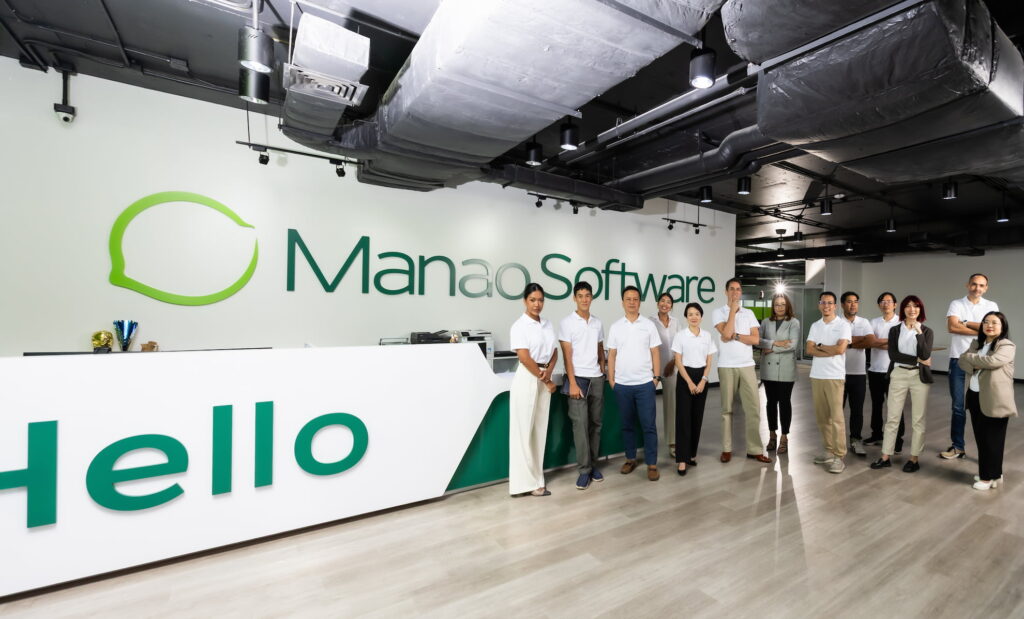
Software Development in Thailand
Thailand has established itself as a credible location for quality software outsourcing, particularly for businesses operating across Asia-Pacific and Europe. Development teams in Thailand offer a combination of strong technical education, English-language communication, and competitive rates, without the quality trade-offs common in purely cost-driven markets.
What separates a strong Thailand-based software partner from a generic offshore arrangement is operational maturity. At Manao Software, our approach reflects Danish management principles applied to a Thailand-based custom software development team. That means straight-talk communication, structured delivery, and decisions made transparently rather than managed to avoid difficult conversations.
Our dedicated developers work exclusively for their clients. There is no bench-switching or resource sharing between accounts. Developers build familiarity with your codebase, your business context, and your team over time, and that continuity compounds into better output and faster delivery as an engagement matures.
Risks are surfaced early, not reported smoothly until they become crises. QA is embedded throughout development, not applied as a final gate. And every project now runs on OMEGA, our own AI-augmented delivery platform, which means clients benefit from AI-assisted estimation, AI-generated test coverage, and AI-accelerated development, all with human review at every stage to ensure long-term maintainability and code quality that holds up under production conditions.
This combination, dedicated teams, AI-augmented delivery, embedded QA culture, and transparent communication, is what we mean when we describe offshore software development services that actually work at an enterprise standard.
Manao Software operates across Chiang Mai and Bangkok, delivering custom web and mobile applications, outsourced development teams, AI solutions, security testing, and workflow automation to clients across Europe, Australia, and Southeast Asia.
Conclusion
Software development works best when it is structured, iterative, and built around honest communication. The methodology matters, Agile and Scrum consistently outperform sequential approaches for real-world business projects. The process matters, skipping discovery, rushing QA, or treating deployment as the finish line all create problems that cost more to fix later. And the partner matters, the right team makes the difference between software that works and software that becomes a liability.
Over 170 companies have worked with Manao Software to build web applications, mobile products, AI systems, and automated workflows. The pattern that works is always the same: clear requirements, a disciplined Scrum process, quality built in throughout, and consistent communication from the first sprint to the last.
If you are ready to start a project or want to talk through what the right approach looks like for your situation, our team is available.
Ready to build software the right way?
Manao Software provides outsourced development teams for businesses that need experienced engineers, a proven process, and transparent delivery, without the overhead of building an internal team.